
 Repair Tools
 Glass Refurbishment
 Chips & Components
 Accessories
 Apple
Apple
 Mac
Mac
 Samsung
 Brands
 REPART
 Other Parts
No relevant results
Smartphone Aftermarket in 2026: Repair, Refurbishment and Parts Market Trends
Sep 09, 2026
486
0
The smartphone business is no longer defined only by new-device sales. Longer replacement cycles, higher device prices, refurbished phones and growing access to repair are creating a larger economic role for the aftermarket.
What is the smartphone aftermarket?
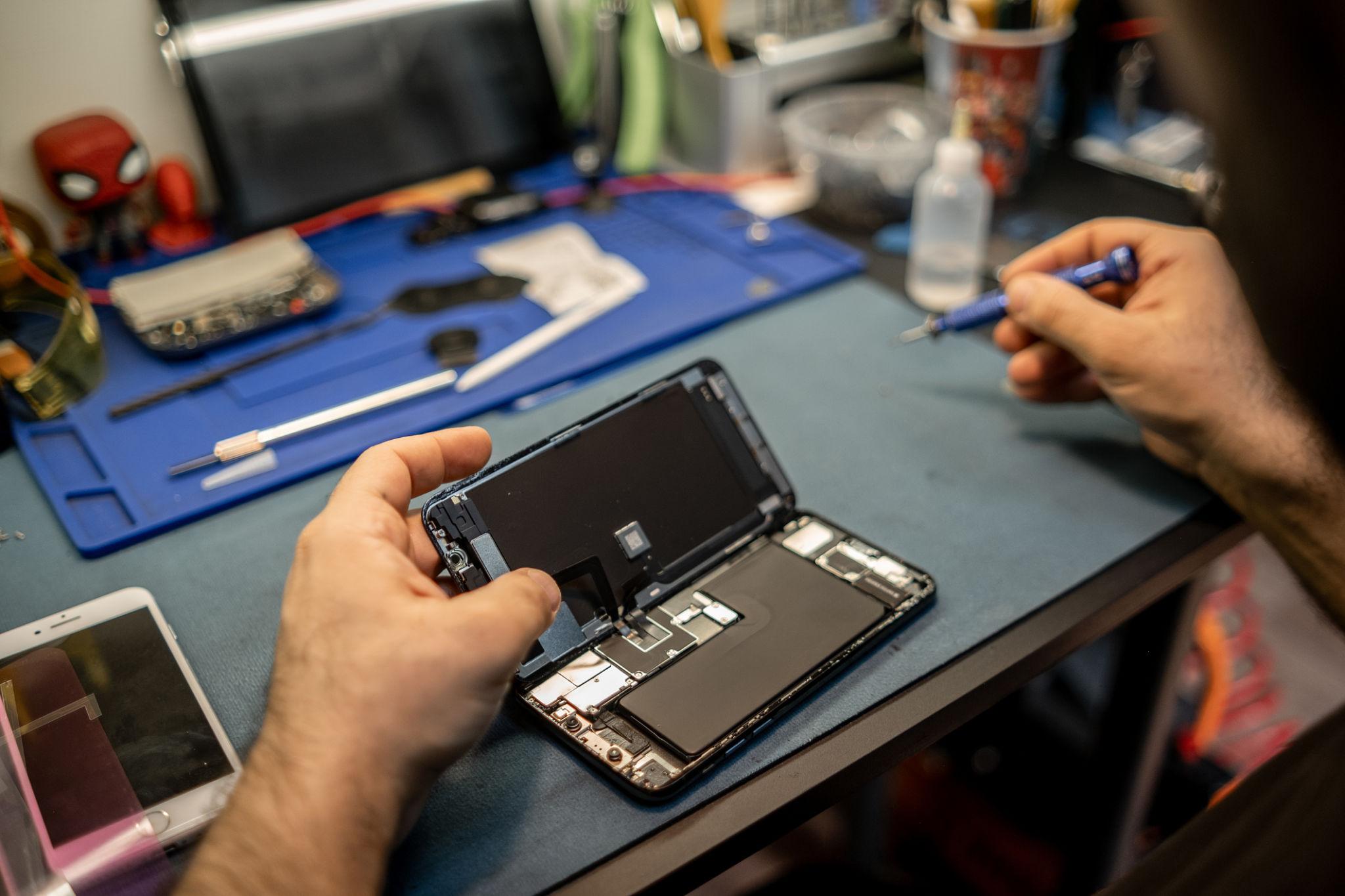
The smartphone aftermarket covers the products and services that keep devices in use after their original sale. It includes replacement screens and batteries, charging components, cameras and other spare parts, repair labor, refurbished and pre-owned phones, trade-ins, accessories and related services.
This distinction matters because the aftermarket is not one standardized market. A report about refurbished smartphone sales is measuring something different from a report about replacement parts or repair services. Market-size figures should therefore be compared only when their definitions, geography and revenue basis are the same.
Why new smartphone sales do not tell the whole story
Global smartphone shipments grew about 2% year over year in 2025, according to Counterpoint Research. Apple led the market with 20% shipment share, while Samsung held 19%.
The picture changed sharply in 2026. Counterpoint reported that global smartphone shipments fell 6% year over year in Q1 2026, and its May 2026 outlook forecast a 13.9% decline for the full year, to about 1.08 billion units. Memory-component shortages and higher component costs were major factors.
At the same time, premium phones remain economically important. Counterpoint reported that the global smartphone average selling price passed $400 for the first time in a quarter in Q4 2025, while smartphone revenue reached a record $143 billion for that quarter. Higher device values can make repair and refurbishment more attractive because owners have more value to preserve.
What this means for the aftermarket
- Slower new-device sales can increase the importance of keeping existing phones in service.
- Higher replacement costs can make repair a more attractive alternative.
- Premium devices create greater economic value for quality refurbishment and repair.
- Longer software support and durable hardware can extend the period in which parts and service are needed.
Repair parts are a major growth opportunity
The Business Research Company estimates that the global mobile device repair parts market will grow from $20.67 billion in 2025 to $23.45 billion in 2026, with a projected value of $39.18 billion by 2030. The report covers parts used for smartphones, tablets and other mobile devices, including displays, batteries, camera modules, connectors, buttons and speakers. These figures refer specifically to the mobile device repair parts market; they should not be presented as the size of the entire smartphone aftermarket.
Why repair parts demand is increasing
- Higher device prices: Expensive phones can justify repair instead of replacement.
- Longer ownership: Consumers are keeping devices for longer, creating more opportunities for battery, display and other repairs.
- Online parts availability: Repair shops and technicians can source replacement components from a wide range of suppliers.
- Independent repair: More repair providers can access parts, documentation and diagnostic resources.
- Repair regulation: New rules in some markets are increasing the availability of spare parts and repair information.
The quality question is becoming more important
A larger parts market does not automatically mean that every replacement part is equivalent. Displays, batteries, cameras and other components can vary in materials, calibration, compatibility, reliability and warranty support.
For repair businesses, the practical opportunity is therefore not simply to sell more parts. It is to reduce repeat repairs, improve first-time repair success and make part quality easier for technicians to evaluate.
Refurbished smartphones and the secondary market
Refurbishment is another important part of the mobile aftermarket. Counterpoint Research reports that global refurbished smartphone sales grew 5% in 2024. Apple accounted for 56% of refurbished smartphone sales that year, up from 51% in 2023.
Growth moderated in the first half of 2025: global refurbished smartphone sales increased 3% year-over-year. Counterpoint reported strong performance in emerging markets, while several mature markets were broadly flat. Apple remained particularly strong, with refurbished iPhone sales increasing 7% year over year in H1 2025.
More recent regional data show that affordability continues to support refurbishment. In India, refurbished smartphone volumes increased 13% year over year in H1 2026 while new smartphone volumes fell around 11%, according to Counterpoint Research.
Why refurbishment supports the repair ecosystem
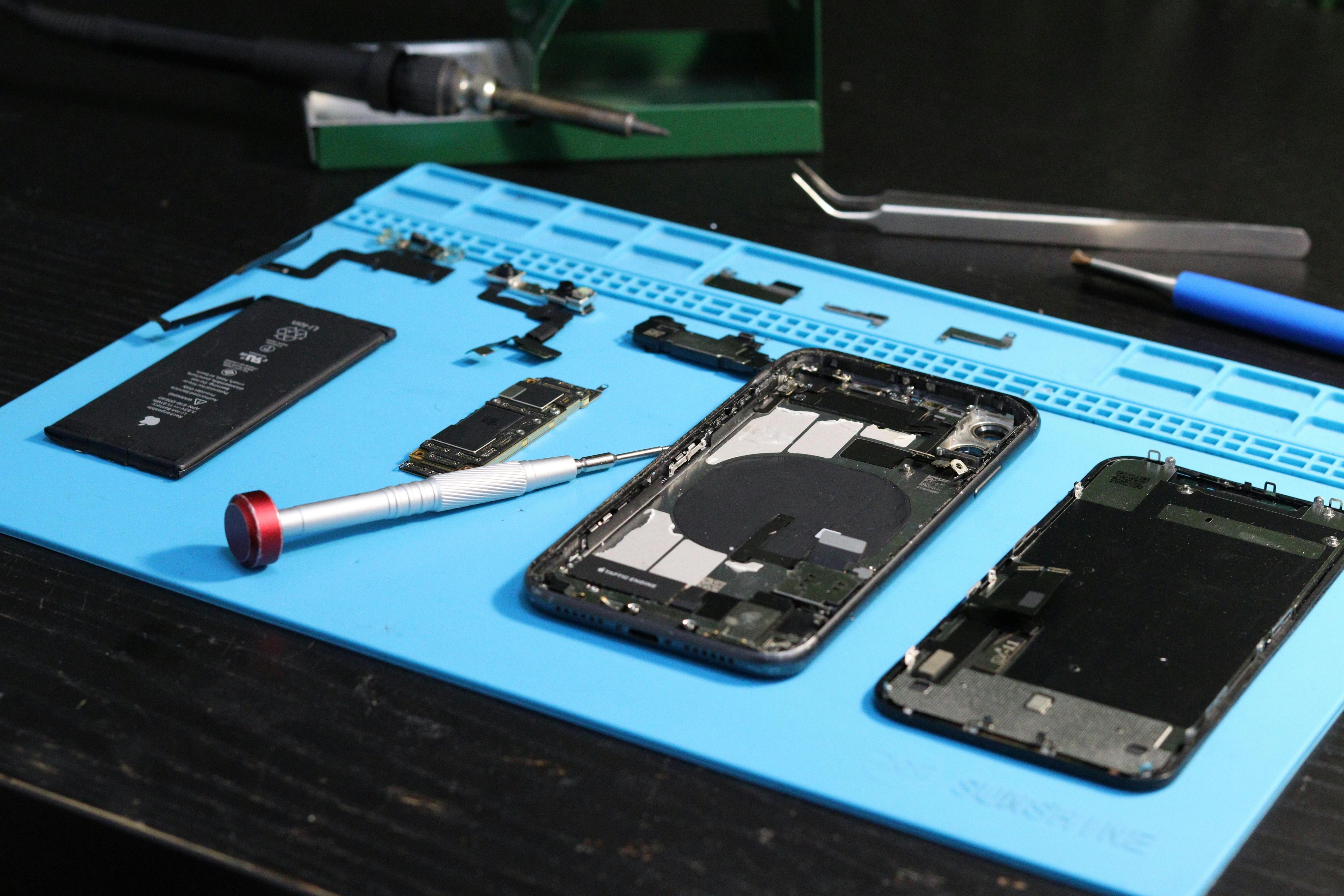
A refurbished phone often passes through inspection, testing, repair, parts replacement and quality grading before resale. That creates demand for the same repair skills and components used by service shops, while also creating a second revenue opportunity for businesses that can combine repair and refurbishment.
Right-to-repair is changing parts availability
Regulation is becoming one of the clearest structural changes in the repair market. In the European Union, ecodesign requirements for smartphones and slate tablets placed on the EU market have applied since June 20, 2025.
The European Commission says the rules include requirements covering repair and disassembly, spare-part availability and software support. Critical spare parts must be available to professional repairers within 5–10 working days and for seven years after the end of placement of the product model on the EU market. The rules also require non-discriminatory access for professional repairers to software or firmware needed for replacement work.
The EU framework also introduces a repairability score on the energy label. The policy direction is important because it makes repairability a product characteristic rather than only a service-market issue.
Apple and independent repair
Apple's Independent Repair Provider program gives qualifying businesses access to Apple genuine parts, tools, repair manuals, diagnostics and training for eligible out-of-warranty repairs. Apple does not publish a current universal count of IRP locations on the pages reviewed here, so older figures should not be presented as a current 2026 total.
Regional market differences
The aftermarket does not develop at the same pace everywhere.
North America
North America is a mature repair and refurbishment market with significant premium-device demand. The Business Research Company identifies North America as the largest region for the mobile device repair parts market in 2025. High device values, established service networks and strong online parts distribution support the market.
Asia-Pacific
Asia-Pacific is expected to be the fastest-growing region in the mobile device repair parts market according to the same market study. The region also contains very large smartphone markets with different repair models, from highly organized service networks to independent and informal repair businesses.
Europe
Europe is particularly important from a regulatory perspective. The EU's ecodesign rules make repairability, spare-parts access and software support increasingly relevant to manufacturers, repair providers and parts suppliers.
Emerging markets
Emerging markets can benefit from the affordability of used and refurbished premium phones. Counterpoint's India data from H1 2026 is a strong example: refurbished volumes grew while new-device volumes declined, showing how higher new-phone prices can redirect demand toward the secondary market.
What the market means for repair businesses and parts suppliers
1. Focus on repairable, high-value devices
Premium smartphones can support high-value repair transactions because the cost of preserving an existing device is lower than replacing it with a comparable new model.
2. Build around the parts technicians replace most
Displays, batteries, charging components, cameras and other common replacement categories should form the foundation of a practical parts catalog. The exact mix should be based on a supplier's own sales and repair data rather than unsupported global failure-rate percentages.
3. Make compatibility and quality easy to understand
Clear model compatibility, part specifications, testing standards, warranty terms and installation information can reduce purchasing uncertainty and support repeat business.
4. Treat repair and refurbishment as connected markets
A business that supplies repair shops can also support refurbishers. Both need dependable displays, batteries, charging components, cameras, housing components and test equipment.
5. Invest in technical capability
As smartphones become more integrated, repair businesses can differentiate through board-level repair, microsoldering, diagnostics, data recovery, calibration and other specialized services where appropriate.
6. Use regulation as a planning signal
Parts availability, repair documentation and software access are becoming increasingly important in major markets. Suppliers should monitor regional requirements rather than treating right-to-repair as a single worldwide rule.
Smartphone aftermarket outlook for 2026–2030
The most important trend is not simply that more smartphones are being repaired. It is that the economics of keeping a device in use are changing.
New smartphone shipments are under pressure in 2026, while device prices and component costs are rising. At the same time, refurbishing markets continue to provide a lower-cost route to premium hardware, and repair regulations are improving access to parts and technical resources in some regions.
For the repair parts segment specifically, The Business Research Company projects growth from $23.45 billion in 2026 to $39.18 billion by 2030. This is a market-research forecast, not a guaranteed outcome, and it should not be confused with the value of the entire smartphone aftermarket.
The bigger opportunity
The strongest long-term opportunity is likely to sit at the intersection of repair, refurbishment, parts distribution and device longevity. Businesses that can provide reliable components, technical knowledge, testing and efficient fulfillment are better positioned than businesses competing only for the lowest part price.
Frequently asked questions
How big is the smartphone aftermarket in 2026?
There is no single authoritative 2026 figure that combines repair services, repair parts, refurbished phones, accessories and other aftermarket activities. Different research firms define the market differently. For example, The Business Research Company estimates the mobile device repair parts market at $23.45 billion in 2026, while Counterpoint separately tracks refurbished and pre-owned smartphone markets.
Is the smartphone repair parts market growing?
Yes. The Business Research Company estimates the mobile device repair parts market will grow from $20.67 billion in 2025 to $23.45 billion in 2026 and reach $39.18 billion by 2030.
Why are refurbished smartphones becoming more important?
Refurbished devices provide a lower-cost way to buy premium hardware. Counterpoint reported 5% global refurbished smartphone sales growth in 2024 and 3% growth in H1 2025, with stronger performance in several emerging markets.
Does right-to-repair increase access to smartphone parts?
In some jurisdictions, yes. The EU's smartphone ecodesign rules require certain critical spare parts to remain available for seven years after a model leaves the market and require professional repairers to receive them within 5–10 working days.
Which smartphone repair parts are most important?
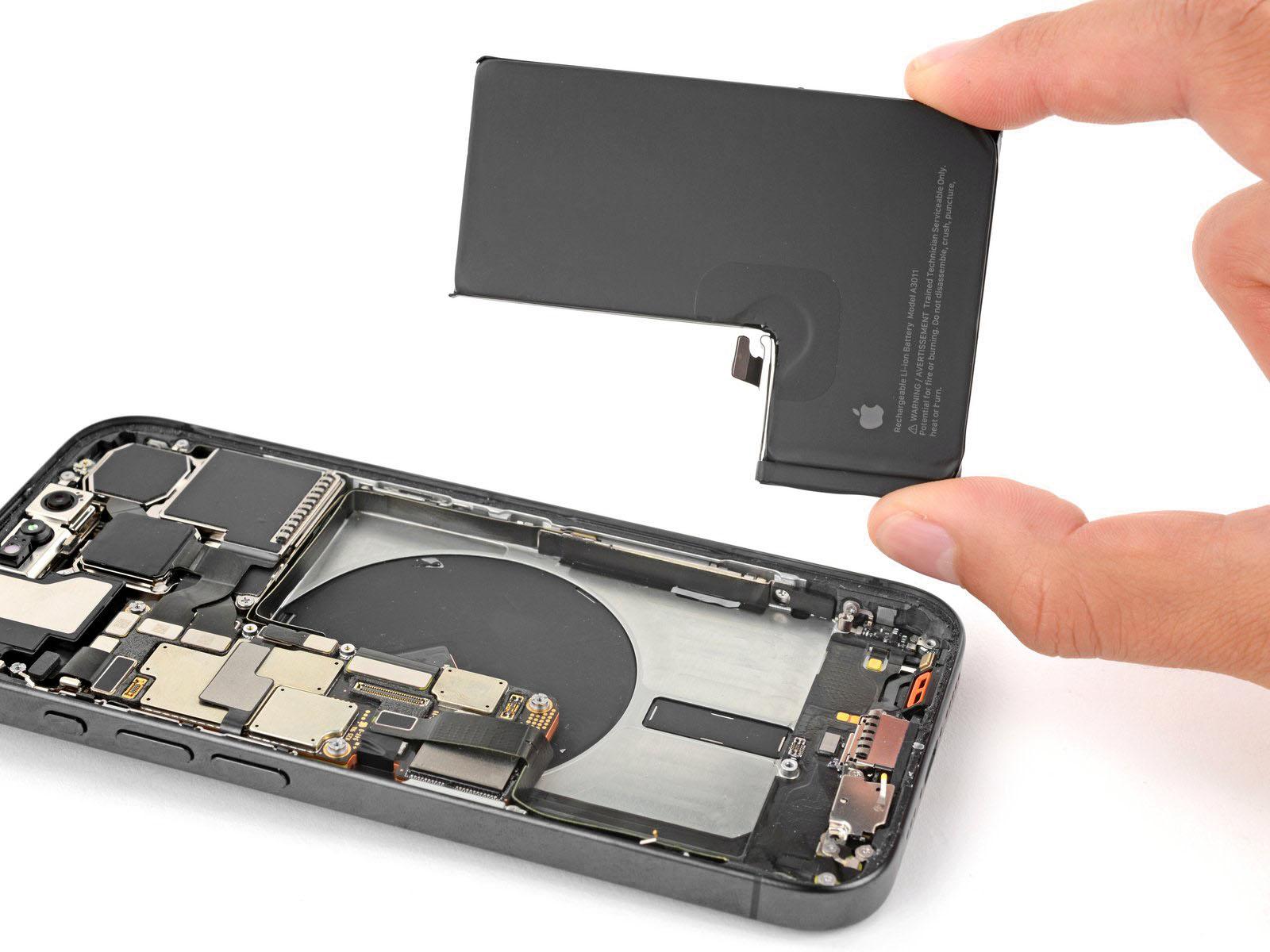
Common categories include display assemblies, batteries, camera modules, charging components, connectors, buttons and speakers. Demand varies by device model, market and repair business, so supplier-level sales data is more useful than applying one global failure-rate estimate to every market.
Sources and methodology
This article uses public information available as of September 8, 2026. Market forecasts are identified as forecasts and are not presented as measured market facts.
- Counterpoint Research — Global smartphone shipments in 2025
- Counterpoint Research — Q1 2026 smartphone shipments
- Counterpoint Research — 2026 smartphone outlook
- Counterpoint Research — Q4 2025 smartphone ASP and revenue
- Counterpoint Research — 2024 refurbished smartphone market
- Counterpoint Research — H1 2025 refurbished smartphone market
- Counterpoint Research — India refurbished smartphone market, H1 2026
- The Business Research Company — Mobile Device Repair Parts Market Report 2026
- European Commission — Smartphones and tablets ecodesign requirements
- Apple — Independent Repair Provider program
- Apple Support — Repair Provider verification
cell phone repair industryrepairmobile phone repair shopstarting a phone repair shopcell phone repair marketcell phone repair business
Related Products
Comment
CATEGORIES
FEATURED POSTS
WHAT'S HOT
Face ID Not WorkingREWA-Selectedboardview softwareFace IDiPhone batteryiPhone Partsclamp fixtureFace ID Repairmobile phone repair shop nameREWA Repair
Write a comment